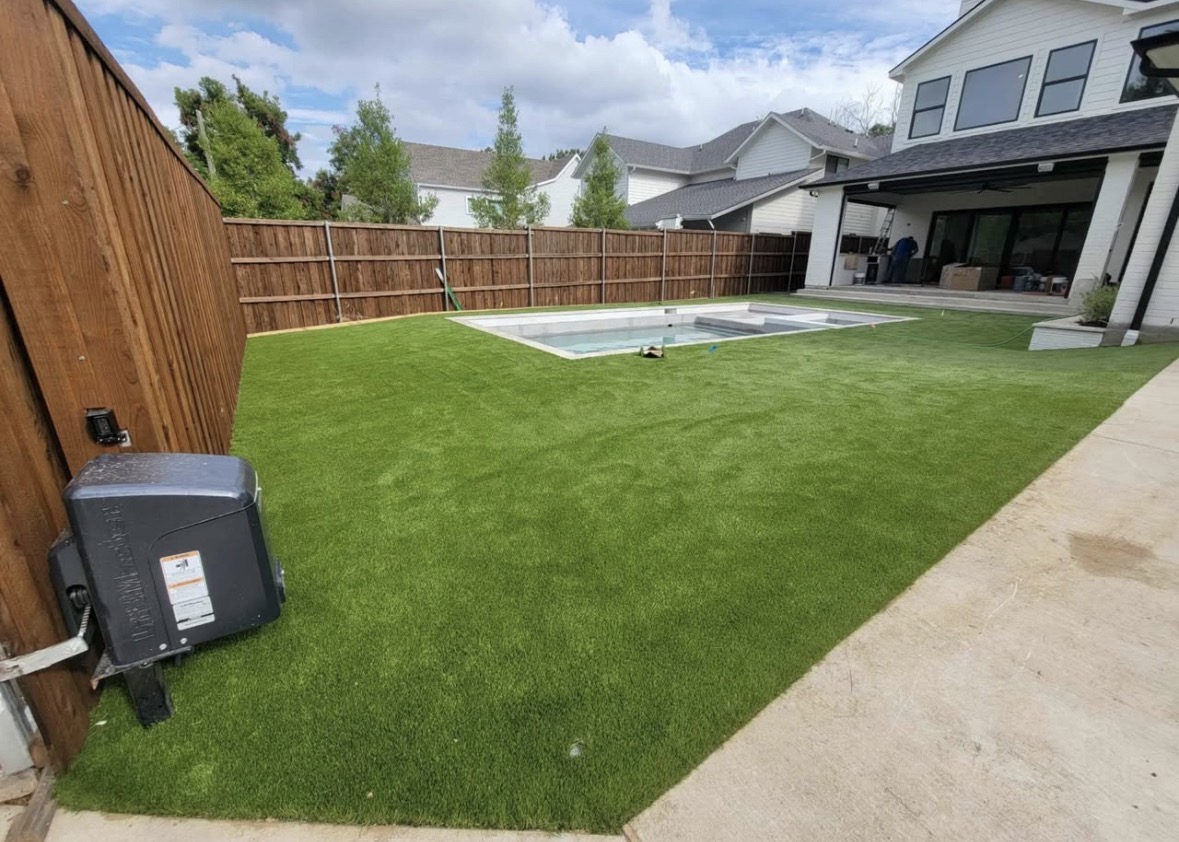
Texas weather puts outdoor surfaces through a lot: blazing sun, high heat, and sudden heavy rain. If you’ve worried your lawn won’t survive these extremes, artificial turf offers a smart, durable alternative. Engineered to withstand intense sun, high temperatures, and heavy rain, quality turf resists UV damage and fading, drains efficiently to prevent pooling, and stays functional and safe even in scorching Texas heat. Here’s how it holds up, and how to keep it looking great year-round.
Built for Texas Weather
Installing artificial turf correctly isn’t just decoration. It’s an engineered system built to thrive under scorching sun, heavy rain, and seasonal shifts that stretch ordinary materials to their limits.
The base fibers, typically polyethylene or polypropylene, are chosen for strength and flexibility, with UV inhibitors that block most harmful rays and keep your lawn from fading into a dull brown. The backing, made from tough materials like latex or polyurethane, holds everything together through temperature swings and moisture exposure.
Surface temperatures can reach 120 to 150 degrees Fahrenheit in direct sun, compared to 85 to 95 degrees for natural grass. Many turf products offset this with reflective fiber coatings and specialized infill; for a long North Texas summer, avoid dark rubber crumb infill, which soaks up heat, and look at options such as Envirofill silica sand instead.
Heavy rainfall is the other major test. Quality turf systems use engineered drainage layers beneath the surface to channel water away quickly, and proper grading with permeable backing lets water pass into the soil below, keeping your yard usable after a storm while protecting the soil from erosion.
| Factor | Natural Grass | Artificial Turf (High Quality) |
| UV Resistance | Fades and dries out | Resists fading with UV-protective coatings |
| Heat Retention | Cooler (around 85-95°F) | Hotter surface, but cooling tech reduces temps |
| Drainage Ability | Can get muddy or uneven | Engineered drainage prevents pooling |
| Maintenance | High: watering, mowing | Low: occasional rinsing and brushing |
| Durability | Subject to wear and tear | Lasts 15-20 years with proper care |
Turf tailored to Texas conditions provides peace of mind through seasons of extremes, from droughts that bake your yard dry to sudden storms.
Handling Rain and Proper Drainage
The secret to managing Texas downpours lies beneath the surface. The turf’s porous backing includes thousands of small drainage holes that let rainwater slip through instead of pooling on top, while a prepared sub-base of crushed stone or decomposed granite absorbs and channels water downward and sideways, directing moisture into the ground so you avoid standing water and muddy patches.
Regular inspection keeps this system effective: clear debris from drainage holes each spring and fall so water keeps flowing freely. A properly installed system can clear even a heavy, sudden rain within an hour, while a natural lawn often stays damp far longer, inviting mold or root damage. Good drainage also protects your investment, since pooled water can erode the base or shift the turf, leading to uneven surfaces and faster wear.
If you’re considering turf for your Texas yard, insist on professional preparation of the base layer. A properly compacted base, generally 3 to 4 inches of crushed stone, accelerates drainage and adds stability during storms.
UV Protection and Heat Resistance
Artificial turf is often assumed to be unbearably hot, but modern UV protection and heat-resistant features help it perform well even under relentless Texas sun. Older turf could reach sweltering surface temperatures above 150°F, hot enough to rival asphalt. Newer turf addresses this with reflective fiber coatings and specific blade shapes that reflect infrared radiation instead of absorbing it, the same idea behind wearing a white shirt instead of a black one on a sunny day, keeping surfaces noticeably cooler.
Even so, use caution during the hottest part of the day; a quick rinse or some shade keeps things comfortable for kids and pets. Cooling infill, such as Envirofill silica sand, improves airflow and evaporative cooling, while permeable backing supports drainage, together acting as a built-in cooling system.
UV protection also safeguards your investment. Without it, synthetic grass fades and shows wear sooner than expected. UV inhibitors built into the fibers preserve vibrant color season after season without chemical treatments, which matters in a place where intense sunlight can turn an unprotected lawn into a patchy eyesore within a year or two.
Seasonal Changes and Adaptation
Texas summers often scorch well above 100°F, while winter nights can dip close to freezing. Quality turf flexes and contracts with these swings without cracking or warping, staying vibrant when natural grass would go dormant. UV-stabilized coatings slow fiber degradation from repeated summer sun, with no extra treatment needed since the protection is built into the fiber itself.
Turf installation matters here too. Good drainage and surface leveling directly affect how turf weathers seasonal pressure: efficient drainage prevents mold growth, while uneven surfaces create spots where heat concentrates in summer or ice forms in winter. Biannual deep cleaning each spring and fall, removing built-up pollen, leaves, and dust, also helps prevent unnecessary heat retention.
A few seasonal habits help:
- Spring: brush away leaves and pollen from seasonal blooms.
- Summer: rinse or mist occasionally to cool the surface during heatwaves.
- Fall: clear leaves frequently and check infill levels after windy weather.
- Winter: check for frost in the early morning; light snow cover causes no damage.
Whether you’re installing a new lawn or maintaining an existing one, our team builds adaptation strategies around local weather patterns, with material selection, installation quality, and maintenance working together for long-term resilience.
Installation Tips for Weather Resilience
Every detail counts when installing turf that can stand up to Texas weather. Start with thorough site preparation: clear all grass, weeds, rocks, and debris, then add a gentle slope so water runs off naturally instead of soaking into the backing.
The sub-base is the foundation of your lawn, providing both support and drainage. A layer of crushed stone or decomposed granite, generally 3 to 4 inches thick, should be spread evenly and compacted thoroughly so the turf won’t shift underfoot during storms or heavy use.
When laying the turf, cut carefully to avoid gaps where weeds could grow, and secure edges with galvanized nails or high-quality adhesive to keep the surface anchored against Texas winds and free of tripping hazards. Choosing UV-stabilized fibers and heat-resistant infill pays off too, and afterward, regular brushing keeps airflow moving for better heat management, while galvanized stakes or concrete edging protect the turf during severe windstorms.
| Installation Step | Why It Matters | Tip |
| Site Preparation | Prevents uneven surfaces and reduces water pooling | Create a slight slope (1-2%) |
| Sub-Base Layer | Provides stability and promotes drainage | Compact thoroughly with 3-4 inches of crushed stone |
| Turf Laying | Ensures smooth appearance and prevents water damage | Secure edges tightly; avoid wrinkles |
| Post-Installation Care | Maintains turf health; reduces heat retention in hot climates | Brush fibers regularly; rinse occasionally |
Maintenance Tips for Longevity
Consistent care prevents the small issues, fibers lying flat, debris buildup, shifting infill, that gradually degrade your turf’s look and performance.
Regular brushing keeps fibers upright and redistributes infill evenly, protecting the cushion underfoot. Pair this with occasional rinsing, ideally during cooler morning or evening hours, to wash away dust and pollen and lower surface temperatures on hot days. Use a leaf blower for loose debris rather than heavy equipment like lawnmowers or power washers, which can damage the turf’s structure.
Checking drainage systems routinely prevents mold beneath the surface, and inspecting your turf after extreme weather catches wear or infill displacement before small issues become expensive repairs.
- Brush turf fibers regularly to maintain upright posture
- Rinse occasionally to remove dust and reduce heat
- Use a leaf blower for debris rather than harsh tools
- Monitor and clear drainage paths after rain
- Inspect turf after extreme weather for wear
Artificial Turf vs. Natural Grass in Texas
Natural grass struggles in Texas: intense heat, blazing sun, and erratic rainfall make it patchy and brown despite regular watering, mowing, and pest control, all of which demand significant time and money. Artificial turf, by contrast, is built to endure Texas’s relentless sun and heat without color loss, with UV-stabilized blade shapes that resist brittleness and fading for up to 15 to 20 years, and it eliminates watering altogether, saving thousands of gallons per year.
| Feature | Artificial Turf | Natural Grass |
| Durability | Handles extreme sun, heat, heavy foot traffic | Prone to browning, patchiness |
| Maintenance | No mowing, fertilizing, pest treatments; occasional rinsing | Regular watering, mowing, pest control needed |
| Water Usage | Zero irrigation required | High water consumption |
| Aesthetics | Consistent rich color year-round | Changes with season and weather |
One caveat worth noting is feel and texture. Modern turf has come a long way thanks to multi-tone color blending and thoughtful blade engineering, and products like our Lush 100 or Cozy 85 lines use higher face weights and dense thatch layers for plushness without a plastic-like look. With professional turf installation ensuring blades are oriented correctly and paired with the right infill, such as Envirofill silica sand, artificial turf often emerges as the most practical long-term solution for Texas conditions.
Ready for a Lawn That Can Handle Texas Weather?
Stop struggling with heat-damaged grass, muddy patches after rain, and constant maintenance. Upgrade to artificial turf designed specifically for Texas conditions and enjoy a green, durable, and low-maintenance lawn all year long.
At Artificial Turf of Texas, we specialize in installing high-performance turf systems built to withstand extreme heat, heavy rainfall, and seasonal changes. From proper drainage base preparation to premium UV-stabilized turf selection, our team ensures your lawn is built to last for years with minimal upkeep.
Whether you’re planning a residential yard, pet area, or commercial landscape, we help you choose the right turf solution for comfort, durability, and long-term value.
Call 817-988-6986 today to schedule a free consultation or request a custom quote.
Transform your outdoor space into a clean, green, weather-resistant lawn that stays beautiful in every Texas season.
Frequently Asked Questions
Does artificial turf become too hot to use during Texas summer months?
Yes, surface temperatures can reach as high as 150°F on the hottest days. Turf with heat-resistant fibers and infill such as Envirofill silica sand reduces that heat, and a quick rinse or some shade helps too.
How does artificial turf withstand extreme heat and sun exposure common in Texas?
UV-stabilized fibers resist fading even at temperatures well above 120°F, maintaining color and structural integrity far better than natural grass. With proper care, high-quality turf keeps its vibrant look for 15 to 20 years.
Can artificial turf handle heavy rain and flooding conditions in Texas?
A well-built sub-base and porous backing let water pass through quickly rather than pooling, so turf dries out much faster than natural grass, which can stay muddy for days. That said, no surface is immune to extreme or prolonged flooding, so proper drainage planning still matters.
How does artificial turf hold up against occasional cold snaps or frost in Texas?
UV-stabilized fibers and durable backing help turf maintain its integrity even below freezing, making rare frosty mornings a minor inconvenience rather than a maintenance concern. Just clear any frost gently to avoid a slippery surface.
What maintenance is required to keep artificial turf durable through Texas weather changes?
Regular brushing and rinsing prevent matting and clear away dust and debris. Periodically topping off infill maintains cushioning and heat resistance, and prompt spot cleaning prevents stains or mold after heavy rain. With consistent upkeep, turf can last 15 to 20 years.