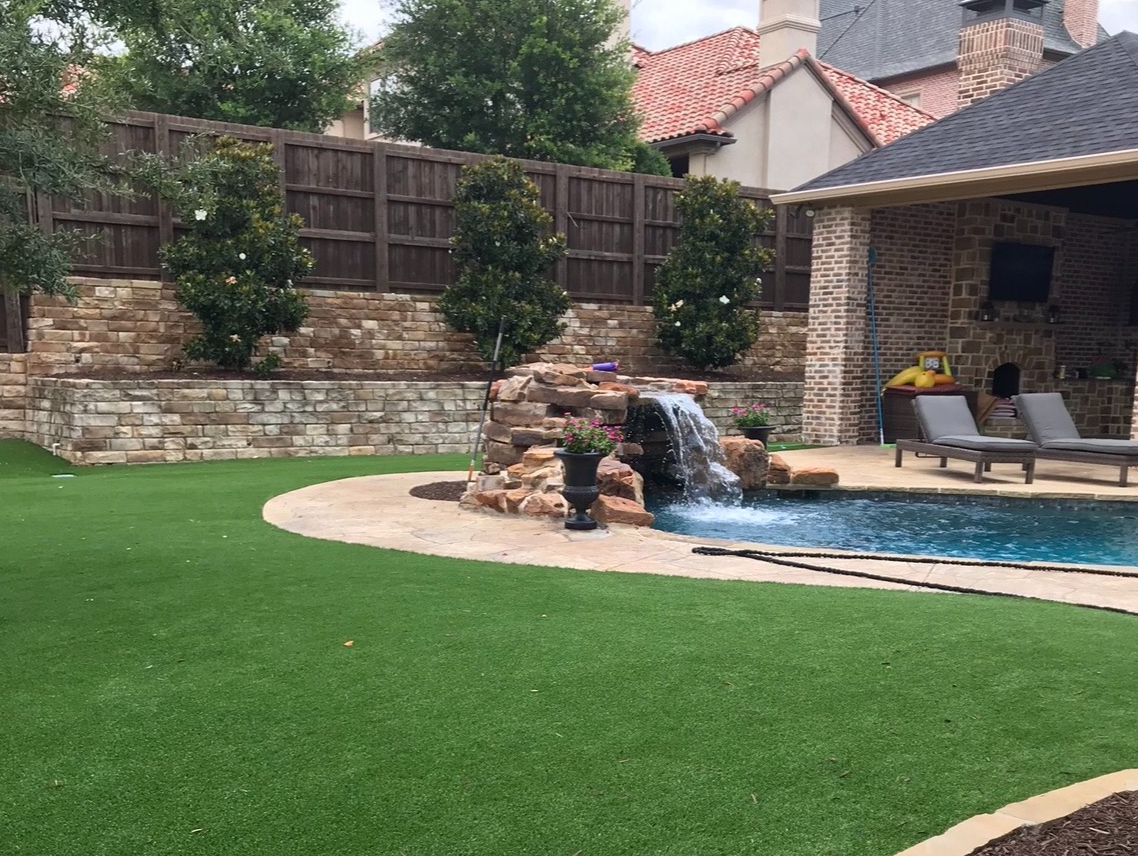
A well-designed backyard putting green should do two things equally well: complement your outdoor space and provide a consistent, enjoyable playing surface. Achieving both requires careful decisions about location, contours, turf selection, cup placement, drainage, fringe areas, and surrounding landscaping. For homeowners in Dallas-Fort Worth, the design should also account for North Texas heat, drainage conditions, available yard space, and how the green will actually be used.
What makes a backyard putting green both attractive and playable? A successful backyard putting green combines a stable, properly prepared base with intentional contours, synthetic golf turf selected for the desired ball roll, well-planned cup locations, functional drainage, and landscaping that integrates the green naturally into the yard. The best design starts with how the homeowner wants to practice and then shapes the playing surface and surrounding landscape around those goals.
Choosing Your Putting Green Design
The design of your putting green should start with the type of playing experience you want to create. Gentle contours can introduce realistic breaks while making the green more visually interesting, but excessive slopes can make certain putts frustrating or reduce the number of usable cup locations. The appropriate contours depend on the size of the green, desired ball speed, cup placement, preferred putting distances, and skill level of the people who will use it.
There is no single ideal size for a backyard putting green. The right footprint depends on available yard space, preferred putting distances, number of cups, desired contours, surrounding landscaping, and whether the area will also be used for chipping, recreation, or entertaining. A smaller green can provide focused short-game practice, while a larger design creates more opportunities for longer putts, multiple breaks, and varied shot angles.
The shape of your putting green should respond to the existing property rather than follow a predetermined template. Curved or organic edges can help the green blend naturally into residential landscaping, while narrower or more geometric layouts may make better use of constrained spaces. The most effective design works around patios, pools, walkways, trees, planting beds, and other existing features while preserving useful putting lines and natural transitions.
Area Selection and Preparation
Location affects both the appearance and usability of a synthetic putting green. Consider sun exposure, shade, nearby trees, existing drainage patterns, surrounding hardscape, and how the area connects to patios or other outdoor living spaces. Direct Texas sun can increase synthetic turf surface temperatures, while heavily shaded areas may collect more moisture, leaves, and organic debris.
Drainage should be evaluated before the putting green design is finalized. Native soil, existing slopes, roof runoff, irrigation, nearby hardscape, and low areas in the yard can all influence how water moves around the future green. The base and drainage system should be designed around the individual property so water does not collect beneath or around the finished putting surface.
Soil composition and preparation matter just as much. If you are going with synthetic turf, thorough grading becomes critical because any imperfection in the base layer affects ball roll significantly. The soil beneath should be compacted to about 90 percent Proctor density so it does not settle unevenly after installation.
Accessibility often gets overlooked but matters more than just convenience. Place your green where it is easy to reach from your house or patio and visible from main living areas. This makes it part of your home’s aesthetic and lifestyle rather than hidden away. Also consider nearby tree root systems. Keeping at least a ten foot distance helps avoid unexpected damage and keeps your putting surface smooth longer.
Natural Grass vs. Synthetic Putting Greens: Which Fits a North Texas Backyard?
Natural grass can provide a traditional golf-course experience, but maintaining putting-green turf at a high standard requires specialized mowing, irrigation, fertilization, disease management, and ongoing turf care.
Synthetic putting turf offers a different approach. It eliminates routine mowing and fertilization while providing a consistent surface that can be designed with custom contours, cup locations, fringe areas, and playing characteristics. Artificial Turf of Texas designs custom synthetic putting greens specifically for residential properties throughout Dallas-Fort Worth.
For homeowners comparing the two options, the decision often comes down to maintenance expectations, desired playing characteristics, water use, available space, and how frequently the green will be used.
Functional Design Tips
A functional putting turf green is about creating a space that genuinely improves your game and fits seamlessly into your backyard lifestyle.
To make practice realistic and challenging, consider integrating hazards like sand traps or rough patches. These features add visual interest and replicate conditions found on real courses. Using white beach sand for traps creates a crisp, authentic look while also making maintenance easier.
Cup placement should be planned around useful putting lines rather than simply adding as many holes as possible. Multiple cups can create different distances and angles, but each location should work with the surrounding contours and provide enough playable space for realistic practice. A thoughtful layout can include a mix of straighter putts and breaking putts while ensuring that each section of the green remains practical and enjoyable to use.
Pay attention to turf height and edge treatments as well. Maintaining synthetic turf at around half an inch to three quarters of an inch keeps ball roll speed consistent while avoiding excessive wear. Smooth curved edges rather than sharp corners look more natural and help prevent turf damage.
Why Base Preparation and Professional Installation Matter
A backyard putting green is only as reliable as the foundation beneath it. Before turf is installed, the area must be excavated and graded according to the property’s existing elevation, soil conditions, drainage needs, and finished green design.
Base materials are then installed, shaped, and mechanically compacted to create a stable foundation. This is also where the intended contours and breaks begin taking shape. Small inconsistencies beneath the turf can affect ball speed and direction, which is why precision during base preparation is critical.
Once the foundation is ready, the selected putting turf is positioned, cut, joined, secured, and finished according to the turf system being installed. Cup locations, seams, perimeter transitions, fringe areas, contours, and drainage all need to work together for the completed surface to look natural and play consistently.
Maintenance Tips and Costs
For natural grass greens, daily mowing, regular fertilizing, pest control, and consistent watering are all essential. Annual upkeep frequently runs into the thousands. Quality equipment like a precise mower and automated irrigation can streamline these routines.
Synthetic turf demands far less effort. Routine brushing keeps fibers standing tall and avoids matting that undermines playability. Occasional rinsing removes dust and debris. Over time, infill material may settle or disperse unevenly, so replenishing it maintains softness and stability underfoot. Annual costs drop dramatically compared to natural grass.
Synthetic putting greens require an upfront installation investment, but they can reduce ongoing needs for mowing, lawn irrigation, fertilizers, and other natural-turf maintenance. Long-term costs depend on the size of the green, selected turf system, site conditions, maintenance requirements, and how frequently the area is used. Routine care helps protect both the appearance and playing characteristics of the finished surface.
Enhancing Visual Appeal
A putting green deserves to be a harmonious part of your overall landscape design. Thoughtfully integrating natural elements such as seasonal flower beds, ornamental grasses, and decorative rocks creates transitions that are visually inviting and naturally grounded. Aim for balance: select native or drought tolerant plants that complement but do not overpower your turf so maintenance stays manageable without sacrificing style.
Beyond plantings, landscape lighting around your green’s perimeter highlights contours beautifully in the evening while extending your playing hours after sunset. Solar powered LED lights are increasingly popular for their energy efficiency and ease of installation.
When custom turf, thoughtful landscaping, and atmospheric lighting come together, you create an outdoor focal point that invites practice, play, and relaxation alike.
What We Consider When Designing a Custom Putting Green
At Artificial Turf of Texas, putting-green design starts with the property and the homeowner’s goals rather than a standard template. We consider available space, existing hardscape and landscaping, preferred putting distances, desired contours, cup locations, fringe areas, drainage conditions, and the overall look the homeowner wants to achieve.
That approach allows the playing surface to feel like part of the property rather than a separate piece of turf added to the backyard. It also gives homeowners the ability to create anything from a compact practice area to a more advanced green with multiple putting lines, undulations, and short-game features.
Artificial Turf of Texas is a family-operated artificial turf company serving homeowners throughout Dallas-Fort Worth. With more than a decade of turf installation experience, CSTI-certified crews, in-house installers, and specialists in custom putting greens, our team designs each green around the property, desired playing experience, and homeowner’s outdoor goals.
Design a Backyard Putting Green Built Around Your Game
Your putting green should fit your property, your playing style, and the way you want to use your backyard. Artificial Turf of Texas designs and installs custom synthetic putting greens for homeowners throughout Fort Worth and Dallas-Fort Worth, with layouts tailored around available space, contours, cup locations, fringe areas, landscaping, and desired playing characteristics.
Whether you want a compact practice green or a larger custom layout with multiple putting lines and short-game features, our team can help you turn the available space into a green that looks natural and plays the way you want it to.
Call Artificial Turf of Texas at (817) 988-6986 or request a free estimate to start designing your custom backyard putting green.
Backyard Putting Green Design FAQs
What should you consider when designing a backyard putting green?
Start with how you intend to use the green. Consider available space, preferred putting distances, number of cups, contours, desired playing characteristics, fringe areas, drainage, surrounding landscaping, and whether you also want to practice short-game shots.
What makes an artificial putting green look realistic?
A realistic backyard putting green combines appropriate putting turf with natural-looking contours, well-designed fringe transitions, property-specific edges, complementary landscaping, and thoughtful integration with surrounding patios, walkways, planting beds, and other outdoor features.
How many holes should a backyard putting green have?
There is no universal number. Cup placement should depend on the green’s size, usable putting lines, contours, and the types of putts you want to practice. Artificial Turf of Texas can customize cup locations according to the property layout and homeowner’s playing goals.
Can an artificial putting green be designed around an existing patio or pool?
Yes. Custom synthetic putting greens can be designed around existing hardscape, landscaping, pools, patios, walkways, and other backyard features. The layout should account for available space, drainage, access, and the visual relationship between the green and the rest of the property.
How much maintenance does a synthetic backyard putting green need?
Synthetic putting greens generally require considerably less maintenance than natural grass. Routine care may include debris removal, occasional rinsing and brushing, plus periodic inspection of seams, edges, cups, fringe areas, and the overall playing surface.
How big should a backyard putting green be?
There is no single ideal size for a backyard putting green. The best size depends on available yard space, preferred putting distances, number of cup locations, desired contours, and whether the area will also be used for chipping or other short-game practice. A custom design allows the green to make efficient use of the available space rather than forcing the yard to fit a standard size.
Can a backyard putting green include a fringe or chipping area?
Yes. A custom synthetic putting green can include fringe turf, chipping areas, and transitions between different turf types to create additional short-game practice opportunities. These features should be planned with the putting surface so the contours, turf heights, shot angles, and surrounding landscaping work together as one cohesive design.