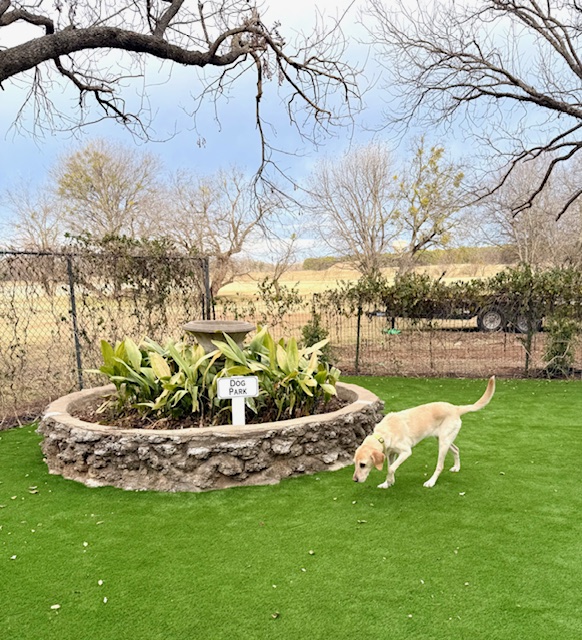
If you have dogs and artificial turf, you know that keeping the surface clean and fresh is not as effortless as the brochure suggests. Odor, slow drainage, and worn spots are the three problems we hear about most from Dallas-Fort Worth homeowners, and almost every one traces back to the same two things: how the turf was installed, and how it has been maintained since.
To address odor on pet turf, clean it regularly with enzymatic cleaners that break down the compounds in pet urine rather than masking them. For drainage, the installation needs a porous base and perforated backing so liquid moves through instead of pooling. To combat wear and tear, choose turf built for pet use and keep up with brushing and regular inspection.
Effective Solutions for Pet Turf Odor
Odor control means breaking apart the compounds that cause the smell, primarily the proteins and salts in pet urine. Enzymatic cleaners use enzymes that digest those compounds rather than covering the scent with fragrance.
Choose a cleaner formulated for pet odors and rated safe for synthetic fibers and backing. Products made for indoor carpet are not always turf-safe, and some degreasers and bleach-based cleaners damage backing over time. Check that the label names artificial grass. Technique matters as much as the product: saturate the area, allow the dwell time on the label (usually 10 to 15 minutes), then rinse completely. A monthly treatment slows odor buildup and helps prevent biofilm in the infill.
Baking Soda and Vinegar
For a gentler option, sprinkle baking soda over problem spots, let it sit several hours, then follow with a diluted water and vinegar spray to release trapped material in the infill. Apply them in sequence, not mixed together, since combining them directly cancels out most of what each one does, and keep the vinegar well diluted, because excess moisture in a yard with marginal drainage creates the exact problem you are trying to solve. This helps with mild odor. It is not a substitute for an enzyme treatment in a yard with multiple dogs.
Regular Rinsing
The most underrated part of odor management is plain water. A weekly pass with a garden hose dilutes urine before it settles into deeper layers, and it is the single habit that separates yards that smell fine from yards that do not. Focus on high-traffic zones: the potty area, the spot by the back door, the favorite patch of shade. Weekly hosing plus an enzyme treatment once or twice a month works for most of our customers.
One design detail worth knowing: on a pet facility project in Southlake, our crew left the existing sprinklers intact so the turf gets regular watering, which keeps urine diluted and cuts smell before it starts. If you have sprinklers in a pet zone, do not assume they must go.
Recommended Cleaning and Maintenance Products
Three categories cover almost everything you need. Tools are the one most people skip, and it costs them.
| Product Type | What to Look For | Purpose |
| Enzymatic cleaner | Turf-safe, pet-safe, formulated for pet odor | Breaks down urine proteins at the source |
| Deodorizing treatment | Rated for synthetic turf, no harsh solvents | Monthly application to prevent odor |
| Routine tools | Stiff-bristled brush or street sweeper, garden hose | Fiber lifting, debris removal, rinsing |
If keeping up with all of this sounds like more than you signed up for, that is why Artificial Turf of Texas runs a turf maintenance program. Our packages cover cleaning, brushing, deodorizing, and repairs, and run $0.50 to $2.00 per square foot depending on the package and the condition of the turf.
Improving Turf Drainage
Drainage is the backbone of a healthy pet turf system. When water cannot move through the turf, it pools on the surface or sits in the base layer, and the area becomes prone to bacteria and smell. This is common in yards with heavy clay soil or an installation that cut corners on the base.
The turf backing comes first. Perforated backing lets water pass through without delay. This is not a premium feature, it is a baseline requirement for outdoor pet turf, so ask about it when you evaluate a quote.
The base materials underneath matter just as much. Picture laying carpet on a wet sponge. On most installations we use a 3/8 inch minus road base, with 3 to 4 inches of decomposed granite or crushed limestone depending on the site. Decomposed granite balances drainage against firmness, giving you a stable surface that still lets water through.
Slope and grading are the third piece, and the one most often ignored. If your lawn sits flat or slightly concave near a patio or fence, water will linger. A slope of as little as 1 to 2 percent moves runoff toward a drainage point. We have regraded yards where the homeowner had good turf and a decent base but still had standing water after every storm, and the puddles disappeared once the grade was corrected. Two out of three elements still leaves you wet. Ongoing sweeping keeps all three working, since leaves, dirt, and pet hair clog the perforations.
What Proper Installation Looks Like
We remove roughly 3 to 5 inches of the existing yard and clear all organic material. Every sprinkler head and valve is marked and protected. The area gets a non-toxic weed treatment and commercial landscape fabric. Base material goes in and is compacted firmly, preventing the settling that later creates dips where water collects. In yards that take on heavy water during a North Texas downpour, a French drain moves it away. The turf is secured with 6 inch galvanized nails every 8 inches around the perimeter and through high-traffic zones, then carpet-kicked so it lies flat.
Our crews are CSTI-certified and we do not use subcontractors, so the team that evaluates your drainage is the team that builds it. Every installation carries a 20-year product warranty and a 2-year workmanship warranty.
Addressing Wear and Tear
Wear starts subtly: fibers mat down, areas look thinner, small tears appear. Regular brushing with a stiff broom or turf rake lifts fibers upright, reverses flattening from pet traffic, and prevents the base beneath from compacting.
Repairs
Turf repair looks simple and often is not. A patch that does not match the original pile direction is visible from across the yard, and a seam repaired without proper adhesive contact lifts again within a season. If your turf looks worn or uneven, our turf restoration and maintenance service handles repairs, and we can match the product and pile direction because we know what went down. Reaching out while the damage is small keeps a repair from becoming a replacement.
Protecting High-Traffic Areas
Think about where your pets actually spend their time: under a favorite tree, along the fence line they patrol, near the doggy door. Outdoor mats or an extra turf section there spreads the load and staves off bald patches. Trimming your dogs’ nails helps, as does rotating a play zone rather than letting one patch absorb every game of fetch.
Evaluating Antimicrobial Options
Infill choice is one of the most consequential decisions in the project, and one most homeowners never hear about until it is too late to change.
On that Southlake pet facility, we used Envirofill, an antimicrobial silica sand infill that reduces odor and inhibits germ growth, paired with a durable short-pile 60 oz turf chosen to prevent urine buildup. An infill that fights bacteria combined with a turf that does not trap liquid does more for long-term odor control than any cleaning routine layered over the wrong materials, and it works continuously without washing out.
Antimicrobial infill costs more up front. In a pet area it is the upgrade we most often recommend, because it reduces cleaning effort for the life of the turf rather than one season.
Comprehensive Pet Turf Care Strategies
Caring for artificial pet turf is a rhythm, not a single task.
| Frequency | What to Do | Why |
| Daily | Remove solid waste promptly, then rinse the area | Waste left in place builds bacteria and odor that saturate fibers |
| Weekly | Gentle brushing plus a hose rinse | Prevents matting, promotes quick drying |
| Monthly | Enzymatic cleaner, then a turf-safe deodorizer | Breaks down organic matter ordinary soap cannot reach |
| Seasonally | Inspect drainage, seams, edges, and infill levels | Catches hidden problems early; topping off infill keeps turf cushioned |
Follow this and your turf can last 15 to 20 years, staying usable for pets and family the entire time.
Keep Your Pet Turf Fresh, Clean, and Built to Last
Dealing with pet turf odors, drainage problems, or worn-out areas in your yard? Artificial Turf of Texas can help restore your synthetic grass or design a new pet-friendly turf system built for long-term performance.
Our team provides professional pet turf installation, repairs, maintenance, and drainage solutions throughout the Dallas-Fort Worth area. From selecting the right turf and infill to correcting installation issues, we make sure your yard stays comfortable for pets and enjoyable for your family.
Call Artificial Turf of Texas at 817-988-6986 today to schedule a free consultation and discover a cleaner, more durable pet turf solution for your home. We are a women-owned, family-operated team with over a decade of work across Dallas-Fort Worth, and our schedule typically books 3 to 4 weeks out.
FAQs on Common Problems With Pet Turf
Are there specific products designed to protect and extend the life of pet turf?
Yes: enzymatic cleaners, antimicrobial infill such as Envirofill, and turf-safe deodorizing sprays. The most important protection is not a product at all. It is pairing the right turf and infill for pet use in the first place, since no cleaning routine compensates for materials that trap liquid.
How often should pet turf be cleaned or replaced to prevent odor and damage?
Rinse weekly, more often after accidents, apply an enzymatic cleaner once or twice a month, and inspect seasonally. Quality turf installed correctly and maintained lasts 15 to 20 years. If a pet area fails well before that, the cause is almost always the base, the drainage, or the infill rather than the turf itself.
What are the most effective methods to eliminate odors from pet turf?
Three things, in order of impact. First, drainage: if liquid is not moving through and away, nothing else will hold. Second, regular rinsing, which dilutes urine before it settles into the backing. Third, enzymatic cleaners, which break down the compounds causing the smell. Antimicrobial infill makes all three work better.
What maintenance steps help reduce wear and tear on pet turf caused by pets?
Brush the fibers regularly to reverse matting and keep the base from compacting. Trim your pets’ nails. Rotate play areas. Reinforce high-traffic zones such as the doggy door and fence line with outdoor mats or an extra turf section. Remove waste promptly, since organic material affects both the fibers and the infill.
How can I improve drainage issues in my pet turf installation?
Drainage depends on three things working together: perforated backing, a porous and properly compacted base, and correct grading. A slope of 1 to 2 percent moves runoff toward a drainage point. If your turf and base are sound but you still have puddles, the grade is the likely culprit, and regrading an existing installation is something we handle regularly.
Can pet urine damage artificial turf over time?
Pet urine does not damage high-quality artificial turf fibers by itself, but repeated exposure can create odor problems if the turf system does not drain properly. A combination of proper drainage, turf with perforated backing, routine rinsing, and enzymatic cleaning helps prevent urine buildup and keeps the surface fresh.
Why does my artificial grass smell like dog urine after rain?
A urine smell that becomes stronger after rain often means organic buildup has collected in the infill or backing. Rain can reactivate trapped compounds that cause odors. Cleaning with an enzyme-based turf-safe cleaner and improving drainage can help remove the source rather than temporarily masking the smell.
What type of artificial turf is best for dogs?
The best pet turf systems are designed with durable fibers, strong backing, efficient drainage, and pet-friendly infill. Shorter pile turf with antimicrobial infill is often preferred for dog areas because it allows liquids to pass through quickly and reduces the chance of odor buildup.
Can existing artificial turf be fixed if it has odor or drainage problems?
Yes, many pet turf issues can be corrected without replacing the entire yard. Professional solutions may include deep cleaning, infill replacement, drainage improvements, regrading, or repairing affected turf sections depending on the cause of the problem.
How often should I brush artificial turf used by pets?
Pet turf should typically be brushed weekly or as needed in high-traffic areas. Regular brushing lifts flattened fibers, redistributes infill, and prevents pet activity from creating worn paths or compacted areas.
Does artificial turf require more maintenance when you have multiple dogs?
Yes, homes with multiple dogs usually need more frequent rinsing and cleaning because more urine and waste pass through the turf system. A properly installed pet turf system with quality drainage and antimicrobial infill can significantly reduce maintenance needs.
Is antimicrobial infill worth it for pet turf?
Antimicrobial infill can be a valuable upgrade for pet turf because it helps reduce bacteria growth and odor-causing buildup. While it does not replace regular cleaning, it works alongside proper drainage and maintenance to improve long-term turf performance.
How long does pet turf usually last with proper maintenance?
High-quality pet turf that is professionally installed and maintained can typically last 15 to 20 years. Regular cleaning, brushing, drainage inspections, and timely repairs help maximize the lifespan of the system.