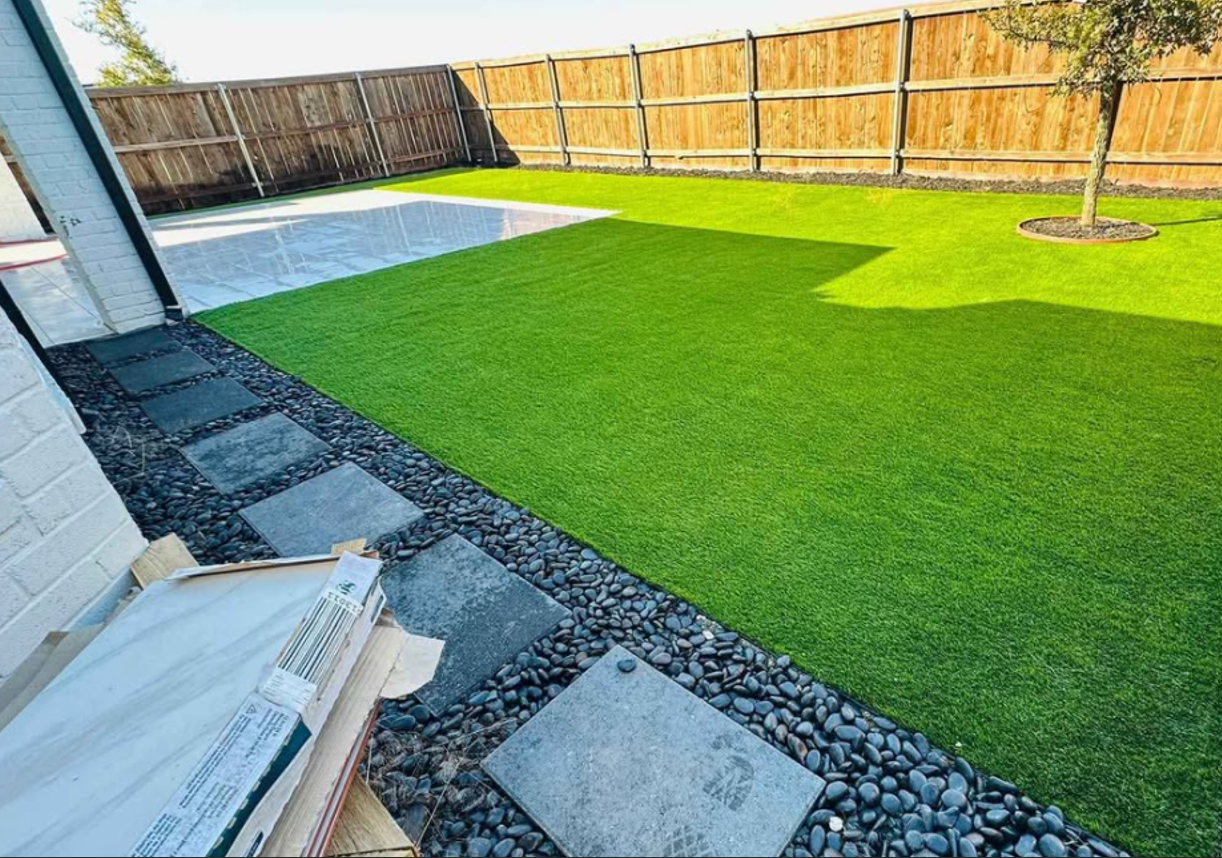
Installing a backyard putting green involves more than laying artificial turf over an open area of your yard. Base stability, drainage, grading, contours, turf selection, seams, cup placement, and surrounding transitions all affect how consistently the ball rolls and how well the green performs over time. For homeowners in Dallas-Fort Worth, soil conditions, drainage, and prolonged Texas heat also need to be considered when designing a durable synthetic putting green.
What are the biggest backyard putting green installation mistakes? The most common mistakes include inadequate base preparation, poor drainage planning, incorrect grading, using artificial turf that is not designed for putting, poorly positioned seams, improper cup placement and overlooking fringe or transition areas. A successful synthetic putting green requires a stable base, intentional contours, suitable drainage and golf turf selected for the desired ball speed and playing experience.
Mistake 1: Choosing the Wrong Location for Your Backyard Putting Green
Choosing where to place your putting green goes beyond simply finding an empty patch of lawn. The location influences performance, longevity, and maintenance requirements.
Start by observing how sunlight moves across your yard. Consider how sunlight, shade and surrounding landscaping affect the area throughout the day. Direct Texas sun can increase synthetic turf surface temperatures, while heavily shaded locations may retain moisture and collect more leaves and organic debris. The best location balances playability, drainage, accessibility and the conditions of the specific yard. Here in North Texas, intense summer heat makes balanced sun exposure especially important.
Large trees may provide shade, but they pose hidden challenges. Roots can push upward over time, creating uneven surfaces and potential tripping hazards. Fallen leaves and twigs also mean more frequent cleaning. If large roots are close to the proposed putting green, have the area evaluated before installation. Depending on the tree, root location and green design, the solution may involve adjusting the putting green layout or incorporating an appropriate root-management strategy.
Evaluate how water moves through your yard as well. Your site should have a slight slope of about 1 to 2 percent, pushing water gently off and away from the putting surface. If your chosen location shows poor natural drainage, consider regrading or incorporating a crushed stone base before installing turf.
Finally, allow enough surrounding access for routine cleaning, brushing and landscape maintenance. Convenient access to a water source can also make occasional rinsing and surface care easier.
Mistake 2: Rushing the Putting Green Base Preparation
The foundation of any great backyard putting green lies beneath the surface. Skimping on base preparation often leads to uneven surfaces, water pooling, or turf that quickly wears out.
Base depth and material requirements should be determined by the property’s soil conditions, drainage, elevation and intended putting green design. The goal is to create a stable, compacted foundation that can support the finished contours without settling or creating low spots that interfere with ball roll.
Base material should be installed, shaped and mechanically compacted to create a firm, stable surface before the final contours are established. Inadequate compaction can allow the surface to settle over time, potentially creating dips, uneven areas and inconsistent ball movement.
On top of the crushed stone, add 1 to 2 inches of coarse sand or decomposed granite to fine tune elevation changes and ensure uniform ball rolls.
Before installing any layers, lay down a weed barrier fabric. This geotextile cloth prevents vegetation from poking through your green. Select a barrier that is permeable enough for drainage but strong enough to resist root penetration over time.
Mistake 3: Poor Seaming, Edging and Cup Placement
Skipping or rushing any part of installation almost always leads to problems. Even slight unevenness in your base can cause water pooling, degrade the turf backing, and promote mold growth. Ensuring your base is level with the proper slope is foundational.
Seaming is another area often overlooked by DIY enthusiasts. Poorly aligned seams create visible ridges that interrupt the smooth roll of the ball and change play dynamics. Take time to cut clean seams and use strong seam tape designed specifically for artificial grass.
Proper edging is equally important. Without solid edging materials secured into the ground, turf edges can lift or fray under foot traffic or weather stress. Installing a sturdy border using plastic, metal, or concrete and anchoring turf edges prevents shifting and helps your green maintain its shape for years.
Mistake 4: Using Turf That Is Not Designed for Putting Greens
Not all artificial grasses are created equal. The turf you select defines how your putting green will play, look, and last.
What artificial turf is best for a backyard putting green? Use synthetic turf specifically engineered for golf and putting applications rather than standard landscape grass. Putting turf is designed to provide a denser, more consistent surface that supports predictable ball roll. The right product should also match the homeowner’s preferred green speed, shot characteristics and overall playing experience.
UV stability is another key factor. Here in Fort Worth, where summers are long and intense, UV rated turf is essential. It protects against fading and premature wear, keeping your green vibrant across seasons.
Always order samples before committing. Place them where you plan to install and roll balls over them to feel the turf’s reaction. This simple step can save you from mismatched expectations.
Quality synthetic turf designed for putting greens can last 15 to 20 years with minimal maintenance when sourced from reputable manufacturers and installed correctly. Our team at Artificial Turf of Texas can help you identify the right product for your specific yard conditions and playing preferences.
Mistake 5: Ignoring Drainage and Water Flow
Without effective drainage, even the best turf becomes a soggy, unusable surface. Water pooling promotes mold, mildew, and premature turf wear.
Good drainage starts with a sloped base between 1 and 2 percent. For every 100 feet, a drop of 1 to 2 feet allows water to flow away naturally rather than sit stagnant. Achieving this slope requires precise grading during installation.
Select artificial grass with a perforated backing that allows water to drain freely from the surface, preventing puddles from forming on top. Always check product specifications for drainage ratings when shopping for turf.
Beneath the turf, stack materials like crushed gravel and sand to channel water downward. A typical drainage layer of 4 to 6 inches of clean crushed stone compacts well yet allows quick water flow. Sand sits atop the gravel for leveling and added filtration. Additional drainage measures may be needed when the property has heavy soils, poor natural drainage, surrounding hardscape or runoff that moves toward the putting area. Drainage should therefore be designed around the conditions of the individual property rather than using the same drainage system for every backyard putting green.
At Artificial Turf of Texas, we emphasize carefully planned drainage layers on every installation because they prevent costly repairs and keep your green performing at its best.
Mistake 6: Overlooking Contours and Surface Consistency
Surface accuracy begins before the putting turf is secured. The compacted base must be carefully shaped to create the intended contours, breaks and transitions while avoiding accidental dips or irregularities. Small imperfections beneath the turf can influence ball direction and speed, which is why precision during base preparation is critical to putting-green performance.
Depending on the type of putting green and desired playing characteristics, specialized underlying systems may be incorporated into the design. These materials should be selected as part of the complete putting-green system rather than used as a substitute for proper grading, compaction or base preparation.
When selecting an underlay, choose products engineered specifically for putting greens rather than general landscaping padding.
Mistake 7: Designing the Green Without Considering How You Actually Play
One of the most overlooked putting green mistakes happens before installation begins: designing the green around appearance instead of how it will actually be used. A homeowner who primarily wants short putting practice may need a very different layout from someone who wants multiple breaks, longer putts, fringe shots or space for family recreation.
Before selecting turf or finalizing contours, consider the preferred putting distances, number and location of cups, desired green speed, slope changes, fringe areas and whether you want to practice shots from outside the putting surface.
Artificial Turf of Texas designs custom residential putting greens on site and offers different configurations based on the property and homeowner’s goals. Taking these playing preferences into account early helps create a green that is not only attractive but also useful for regular practice.
Mistake 8: Underestimating Installation Costs and Maintenance
Artificial Turf of Texas currently prices custom putting green installations at approximately $10 to $20 per square foot installed. Final pricing varies based on the size of the project, design complexity, contours, undulation, site preparation and putting-green system selected. While DIY projects can reduce upfront fees, improper leveling, seaming, or drainage creates frustration and future costs. Professional installation also ensures warranties remain valid.
Do not overlook additional materials such as root barriers, edging, and weed barrier fabrics. Although they increase upfront costs, these elements protect your green and extend its lifespan.
Regular maintenance keeps your green playable and looking fresh. Brush the turf two to three times monthly with a stiff broom or power brush to lift flattened fibers. Clear debris frequently to prevent moisture trapping and mold issues. Schedule an annual inspection to catch subtle changes like base settling or seam wear early, before they become major problems. Replenish infill material every 1 to 3 years depending on use.
Here in North Texas, Artificial Turf of Texas installs synthetic turf designed for Dallas-Fort Worth properties where prolonged heat, heavy use and reduced irrigation needs are important considerations. Because artificial turf does not require routine lawn irrigation, it can significantly reduce the outdoor watering required to maintain a green lawn compared with natural grass.
Careful budgeting combined with routine care keeps your putting green functional and looking great year after year, adding value to your home whether you are practicing your short game or entertaining guests.
Artificial Turf of Texas is a Fort Worth-based, family-operated artificial turf company serving homeowners and businesses throughout Dallas-Fort Worth. With more than 10 years of turf installation experience, CSTI-certified crews and specialists in custom putting greens, our team designs synthetic golf surfaces around each property’s layout, drainage conditions and intended use.
Ready to Build a Backyard Putting Green That Plays as Good as It Looks?
A great putting green starts with more than quality turf. Proper base preparation, drainage, contouring, turf selection, and installation all work together to create a surface that rolls consistently and holds up over time.
Artificial Turf of Texas designs and installs custom backyard putting greens for homeowners throughout Fort Worth and the Dallas-Fort Worth area. Our team can help you plan a green around your yard, preferred putting distances, contours, cup placement, and overall playing goals.
Whether you want a compact practice green or a more advanced setup with multiple breaks, fringe areas and custom features, we can design a solution that fits your property and the way you play.
Get started with a custom putting green consultation today. Call Artificial Turf of Texas at (817) 988-6986 or request a quote online.
FAQs About Backyard Putting Greens
What is the biggest mistake when installing a backyard putting green?
The biggest mistake is usually inadequate base preparation. Even high-quality putting turf cannot compensate for an unstable, poorly compacted or incorrectly shaped foundation. Base preparation affects drainage, surface consistency, contours and how predictably the golf ball rolls.
Does an artificial putting green need drainage?
Yes. A backyard putting green needs a way to move water away from the playing surface. The appropriate drainage design depends on the property’s slope, soil conditions, surrounding landscaping, hardscape and local runoff patterns.
Can regular artificial grass be used for a putting green?
Standard landscape turf is generally not the best choice for the primary putting surface. Synthetic golf turf is specifically designed to provide the density and surface consistency required for predictable ball roll. Landscape turf may still be used around the green as fringe or surrounding artificial grass.
How much does a custom backyard putting green cost in Dallas-Fort Worth?
Artificial Turf of Texas currently prices custom putting green installations at approximately $10 to $20 per square foot installed. Final pricing depends on factors such as size, site preparation, contours, undulation and overall design complexity.
How long can an artificial putting green last?
A high-quality synthetic putting green can provide many years of use when the base, drainage, seams and turf system are properly installed and the surface receives routine maintenance. Actual lifespan depends on product quality, installation, traffic, environmental exposure and ongoing care.